PO Box 2458, Tijeras NM 87059

Mountain Gardens--finding success with plants for the high desert and East Mountains of New Mexico

Monday, May 28, 2012

Class Schedule

Took this photo the other evening. That's smoke from the Baldy fire in the Gila hazing the sunset. While climate change causes disastrous extremes in the rest of the country--think tornados, flooding, blizzards, hurricanes--we in the southwest are seeing wildfires, last year's season the worst in New Mexico history. So with streaming eyes, I decided to repeat Landscaping For Firesafety as our first class this summer. We're switching the date to Friday evening (Sundays are a scramble for us with family), 6-7 PM, since we're open late anyway.  The composting class was set earlier. So here's the revised schedule:

June 10th, 1-3 PM. Composting with guest speaker, Master Gardener, Ralph Anderson

June 15th, 6-7 PM. Landscaping for Fire Safety.

June 29th, 6-7 PM. Soils (More Interesting Than You Would Believe!?)

July 13th, 6-7 PM. Gardening For (and despite) Wildlife

July 27th, 6-7 PM. Caring For Trees & Shrubs.

August 10th, 6-7 PM. Seedstarting--Tips, Tricks, & Timing

August 25th, 1-2 PM. Wintering Over. (This is during ArtFest, and the big, end of season plant sale).

Bring lawn chairs, and anything else needed for personal comfort. The talks will be in the new Tree & Shrub area behind the shop, so hopefully the street noise won't be the factor that it has been in the past. No more reverent pause as the bikers roar by on their way to Madrid!

Thursday, May 24, 2012

Weekly Specials

We are going to have different plants on sale each week. The Hardy Geraniums are buy one, get one for 1/2 price. These are in gallon pots. They love the shade, and will continue to bloom through out the summer. We have white, purple, pink and blue. 
We have also put the tomatoes on sale for half price.
Our first class will be held Sunday, June 10 at Mountain Gardens. At 1pm Ralph Anderson will show you how easy it is to start a compost pile. Bring a chair and lots of questions. Ralph is a Master Gardener and a Master Composter. Call for more info.

Wednesday, May 9, 2012

Mother's Day Specials

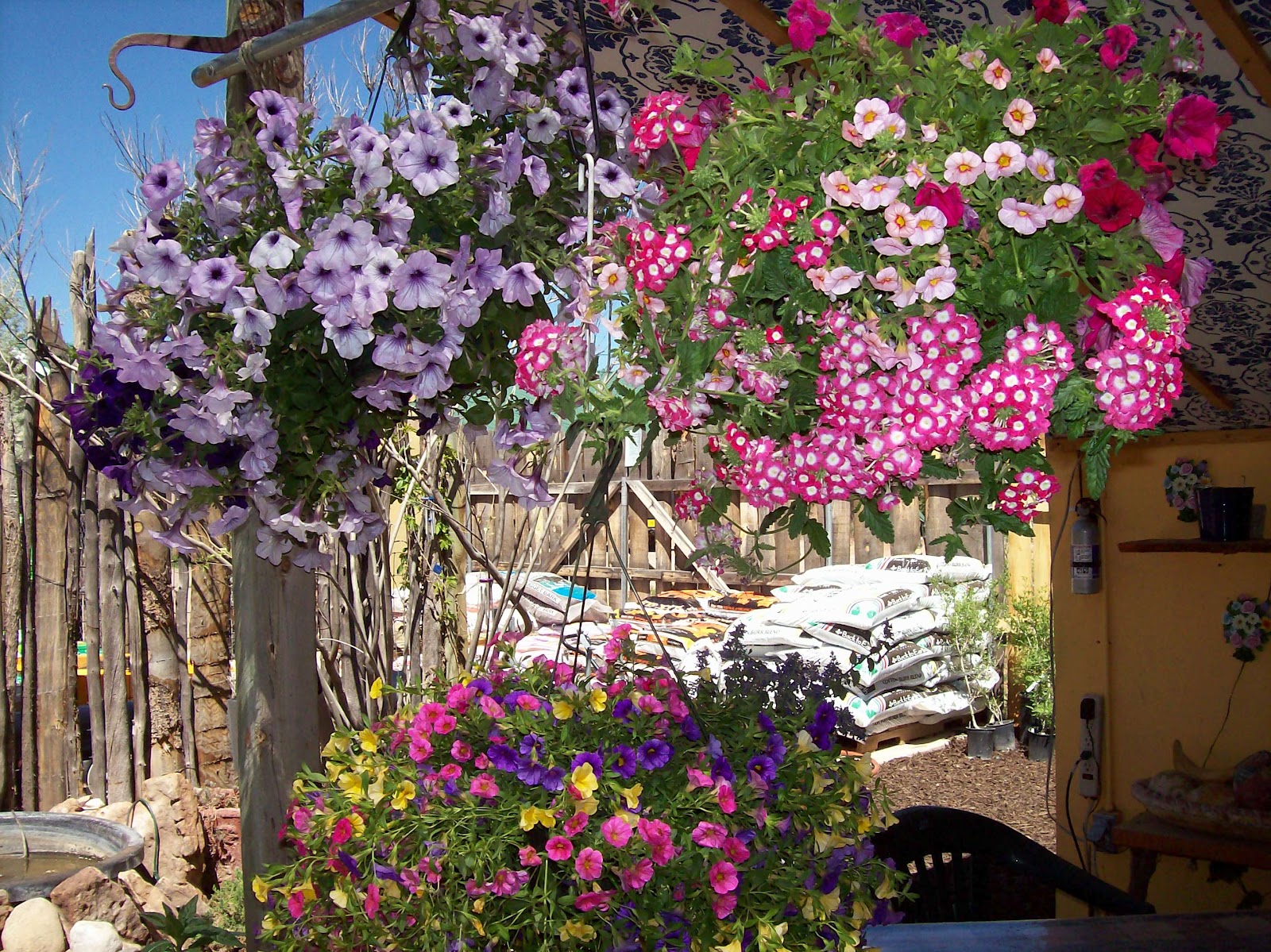
This Sunday is Mother's Day. We have beautiful hanging baskets, a full supply of perennials, trees and shrubs, veggies and annuals. We will have hardy Geraniums on special, buy one-get one 1/2 off. We will be giving a free Aloe plant to each customer who makes any purchase. These specials are for Saturday and Sunday.


Sunday, April 29, 2012

Open for 2012 Season

We are open for the 2012 season!! The greenhouses are full of plants, we are waiting for the weather to stay warm at night before we fully stock the shelves at Mountain Gardens. We have added more room behind the bag goods for shrubs, and a new table for our Plant Select collection. We are going to have a potting area for anyone who wants to buy or bring flowers pots to fill with our wonderful hardy plants.
Our business hours are: Tuesday, Wednesday, Thursday: 10am-5pm
Friday: 12noon-7pm        Saturday: 10am-5pm           Sunday: 12noon-4pm

Saturday, March 24, 2012

Love-lies-bleeding


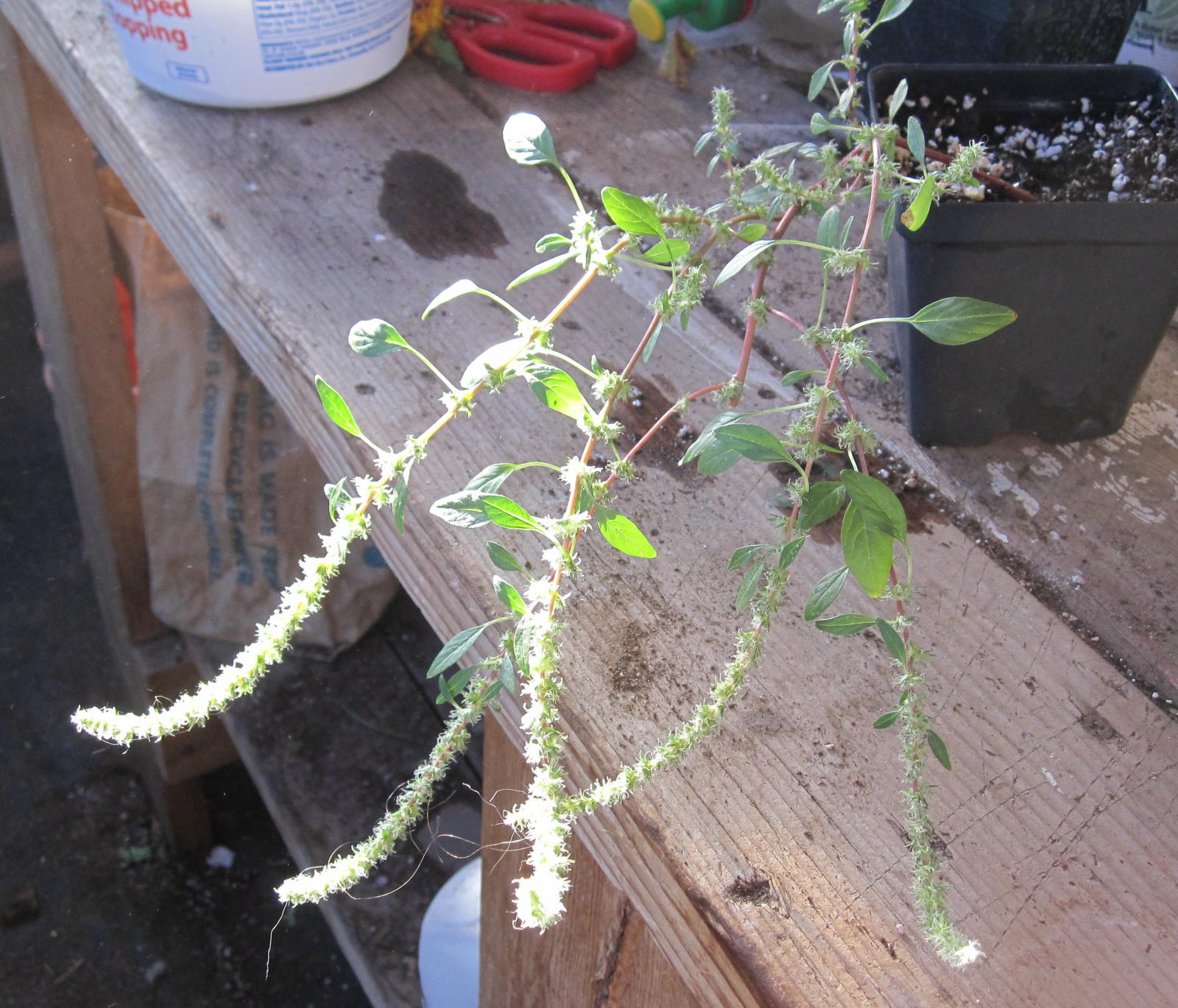
It looks like we’ll finally have love-lies-bleeding, amaranthus caudautus. I’ve tried this annual from seed several times with poor results. The last batch looked more like common pigweed, amaranthus palmeri, which, though edible and nutritious like most amaranths, is considered a crop nuisance. While one of the plants this year looked problematic (below), the rest look like they’re coming true. The red love-lies-bleeding should dangle!

Amaranth has been grown for food for thousands of years. Love-lies-bleeding is one of the species (70!) grown for grain. It is gluten free, and can be purchased in local stores as a grain substitute. I’ve tried it—not bad. The seed is retained on the plant well into the winter making it a useful plant for feeding birds, too.

As an ornamental, it’s been used in gardens for hundreds of years—Jefferson grew it at Monticello. It retains color well as it dries, and can be used in dried flower arrangements.

Monday, March 19, 2012

Osage Orange

Anna gave us an Osage Orange fruit a few months ago. I disassembled it a few weeks ago, and now I'm plucking out all the seedlings...

When I was a girl in western Kentucky, the girls would chuck these fruits at the boys (back then boys weren't allowed to hit back). The Osage Orange fruit is apple-sized, round, and hard as a rock. As we were all between 6 and 10 years old, we didn't do much damage (despite playing baseball all summer, we all "threw like girls"). But the fruit had a faintly citrusy fragrance (try saying that three times), and the tree itself was big and shady.


Taking the ball apart and extracting the seed was messy and took a couple of hours. But we got about a cup of seed. We soaked it for three days, then I planted all the seed, and put it on the heat mats (my directions suggested the germination might be low), and all the seed came up! I've plucked several times now. But more is always better. Seedlings don't often all survive--mice, weather, insects, human error--I planted wafer ash and only have about fifteen seedlings now.
I'm guessing we'll have a couple of hundred osage. I've got five flats plus what's still in the plug trays!

Nostalgia aside, why do I want Osage Orange trees anyway? The maclura pomifera is a long-lived, decidous tree that can reach 60 feet, with an 80 foot canopy spread (though probably not under our conditions). It's hardy in zones 4-9, is drought tolerant, and isn't fussy about soil. It's a native to the prairie states, but is found from coast to coast.

The Osage Indians prized its flexible, yellow wood for bows hence two of its names--the second, bodark, comes from the French, boi d' arc, another reference to bows. In the 1800's many thousands were planted for hedge rows (hence the third name--hedge apple) because it grew quickly, was very thorny when young, and could be heavily pruned. The very rot resistant wood was also used for fences. The males are less thorny and are used more today, but those amazing fruit only come from the female.

The fruit is attractive--mine sat on the window sill for months before losing its lime green color. The seeds are edible (you really have to want it), and attract squirrels (now that's the only downside for me). And a nice big pile of them would be great for chucking at bulls browsing through my greenhouse!

Visit the links below for more great information, and pictures of the fruit and mature tree.

http://hedgeapple.com/
http://lewis-clark.org/content/content-article.asp?ArticleID=2523
http://ohiodnr.com/forestry/trees/osage_orange/tabid/5403/Default.aspx

Monday, February 27, 2012

Plumbing for Heating Bareroots

This is the last installment on the hoophouse for bareroots. Though its primary purpose was to jump start the bareroot fruit trees and lilacs, there will be room for some of the other trees and shrubs we order bareroot then grow out for a year or two (or more). Growing bareroot stock lets us offer plants at a more affordable price. Shipping on container grown plants is incredibly expensive, and the minimums that must be ordered are usually far beyond what our little nursery can consider.

So--to recap, pvc pipe is looped under the four inches of compost that the potted trees are sitting on. Wink is doing the final hookups on the fittings that will carry heated glycerine through the looped pipes, then return it to the reservoir in a closed loop.


We hooked up the pump and the solar panel control. At this point I would like to say that plumbers are worth what they charge. This little system took dozens of fittings, lots of redo's when something got reduced backwards, etc., and still sported one leak after all the sealant. Wink holds all this in his head, and Aly and I stand back in awe (and Wink admits he's always tickled when it works). Electrical is always easier (of course, when something "leaks" electricity it's usually pretty shocking!)

Aly is screwing down the pump in the photo. Behind it are the intake and outtake lines that carry glycerine to and from the solar heater. Wink's hand is on the solar panel controller--it runs the pump.

This photo shows the heater and solar panels outside the hoophouse. They face due south so get the most sun that can be had from a fixed system. Piping coiled inside the heater carries the glycerine that absorbs heat from the sun, then gets pumped under the floor of the hoophouse. (Previous blogs show the heater interior being plumbed)


In the next shot Wink is pouring the glycerine into the reservoir. The freezing point of glycerine is -31, so the pipes will be safe from freezing unless we have a snap like the one last winter. Since the system runs off solar panels, it won't be operating at night when we'd be most likely to experience that kind of cold. If it gets that cold in the daytime, I give up!


The last shot shows the glycerine returning to the reservoir. It worked!!!

The breakdown on the hoophouse: we spent about $400 on the 2" white pvc, $85 on wood, $150 on the white plastic cover material, and about $100 on the groundcover fabric (less than a third of a $400 roll). That's about $735--pretty good when you consider we buy the aluminum hoophouses for about $1200--not including wood, plastic cover, or groundcover.

The heating systems adds about $450 to that. The 45 watt solar panel kit (includes the 12 volt dc charge controller) was on sale at Harbor Freight for $145. The 12 volt rv water pump was $99. The 5 gallons of glycerine (ordered online) was $85 plus shipping. Assorted fittings and clamps added about $25. We had the solar heater (salvaged) but the black flex irrigation pvc we used inside was about $100.

So the total cost was under $1200. Not bad to protect thousands of dollars worth of plants, year after year.

We're happy to answer any questions--go to the Mountain Gardens facebook page, or email.